





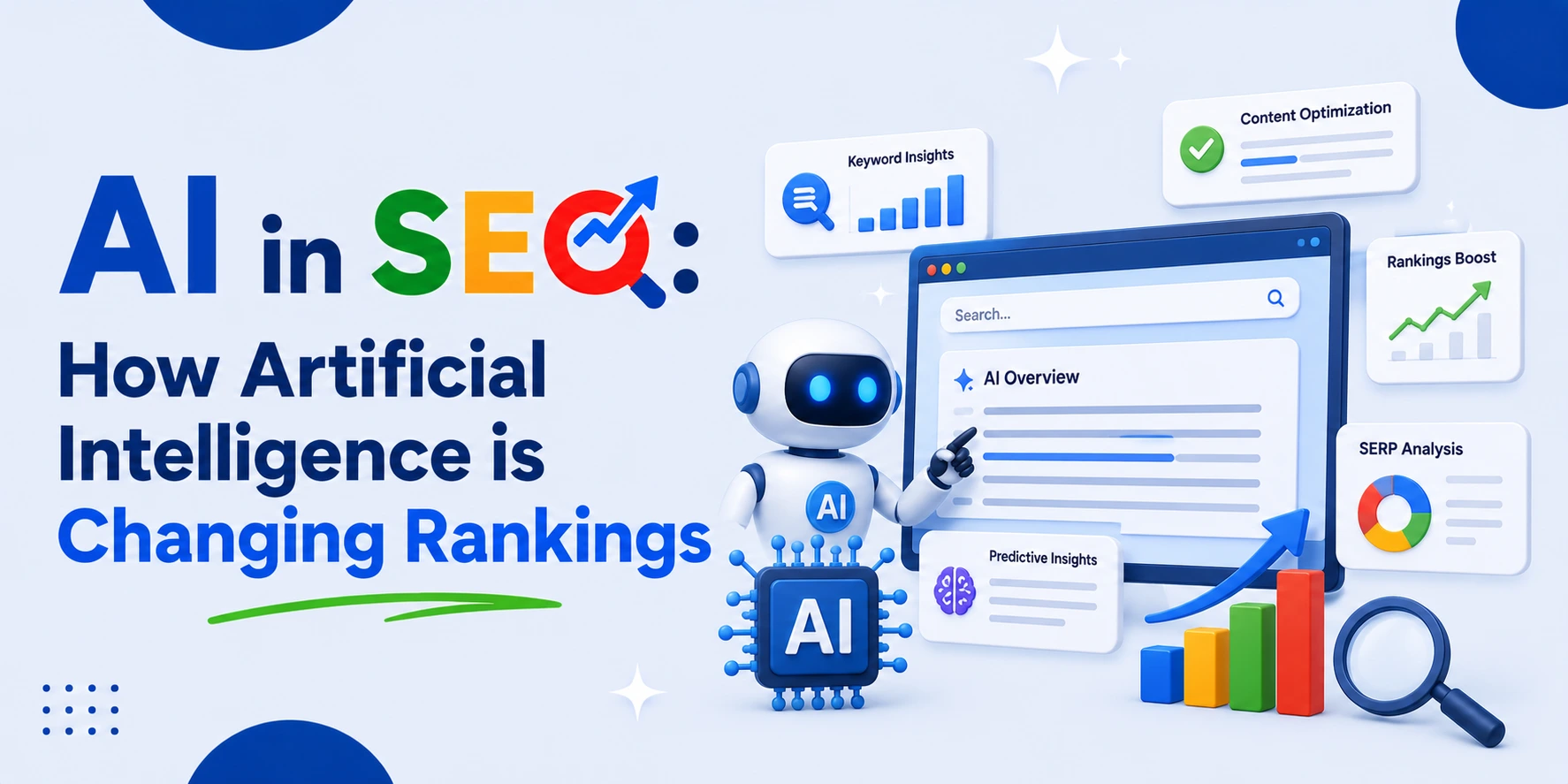
AI in SEO helps businesses improve search rankings by understanding user intent, analysing search patterns, supporting content planning, identifying trends, and improving website optimisation.
In 2026, AI plays a major role in keyword research, SEO tools, content strategy, technical SEO, and user experience, helping websites create more relevant content and achieve better visibility in search results.
Basically, Search engines want to direct users to websites that help those users and provide the information that they need. In this guide, we will explore how AI in SEO is changing search engine rankings, why it is important, and the ways that AI is being used in SEO in 2026.
Want Results Like These for Your Business?
Get a free site analysis from BThrust Malaysia and find out what's holding your SEO and traffic back.
What Is AI in SEO?
AI in SEO helps businesses improve search visibility by analysing data, understanding search intent, identifying trends, and supporting content optimisation.
The use of artificial intelligence in search engine optimisation means that smart technology is being used to guide the tasks involved with optimising a website for search engines. AI can help a business to study the information that is available online about their industry, customers, and competitors.
AI can help to find trends and to understand the needs of users online in order to create a better content strategy for that business. In the past, SEO tended to focus on finding the right keywords and including those keywords on the pages of a website.
However, search engines today look beyond just the use of keywords. They seek websites that have content that will be helpful to users and that will answer their questions. Therefore, businesses create their content with the intention of helping their audience and solving their problems rather than just creating content for search engines alone.
Why Search Rankings Are Changing
Search engines have one clear goal. They want to give users the best answer as quickly as possible. To achieve this goal, they examine many signals, including:
- Search intent
- Content quality
- Website speed
- User experience
- Trust and authority
- Relevance
Modern search systems can read and understand language much better than before. They connect ideas, recognise topics, and identify relationships between words.
Because of this, rankings change more often than they did in the past. Websites that help users climb higher. Websites that offer little value often slide down.
Also Read: Answer Engine Optimisation vs Traditional SEO Explained
How Search Engines Understand Content Better
Search engines understand content better by analysing context, relevance, and user intent rather than relying only on keyword matches.
Years ago, many websites repeated keywords again and again. Some pages ranked simply because they used the same phrase many times.
Today, search engines look much further than keyword counts. They explore the overall meaning of a page.
Context
Search engines gather clues from the entire page. They look at related topics and supporting information. This helps them understand the main subject.
Relevance
They compare the content with the user’s question. They favour pages that provide clear and useful answers.
Intent
They try to uncover what the user wants. Someone searching for information may need a guide. Someone searching for a product may need comparisons or reviews. Search engines now connect content with these needs. This deeper understanding continues to reshape SEO.
How AI is Used in SEO 2026
In 2026, AI is used in SEO to improve keyword research, content planning, trend analysis, and decision-making.
Many business owners are looking for an answer to how AI will be used in SEO 2026. So, the answer appears across many areas of search optimisation.
These systems help businesses gather insights, uncover opportunities, and improve decision-making.
Smarter Keyword Research
Keyword research remains important. However, the process now reaches far beyond finding popular search terms. Modern systems can uncover:
- Related topics
- User interests
- Search intent
- Emerging trends
This broader view helps businesses create content around complete topics instead of single keywords. When content covers a subject well, search engines often reward it with stronger visibility.
Better Content Planning
Businesses need content that matches audience needs.
Modern systems help teams discover:
- Common questions
- Popular subjects
- Missing content areas
- Seasonal interests
These insights help businesses create content that people want to read. Instead of guessing, they can build plans around real user needs.
Search Trend Analysis
Search habits change all the time. Businesses that spot trends early often gain an advantage. Trend analysis helps organisations:
- Detect new topics
- Follow audience interests
- Prepare future content
- Build authority sooner
This approach helps websites stay relevant as search behaviour changes.
The Growing Role of SEO Automation Tools
SEO supported automation tools help businesses save time by handling repetitive SEO tasks such as audits, reporting, monitoring, and technical analysis. Teams often review websites, track performance, fix technical issues, and monitor rankings. This workload can grow quickly.
That is why many businesses use SEO automation tools. These tools handle repetitive work and help teams save time. They can assist with:
- Website checks
- Performance reviews
- Technical analysis
- Reporting
- Content reviews
The purpose of SEO automation tools is not to replace people. Instead, they remove routine tasks so teams can focus on strategy and growth.
As search continues to evolve, SEO tools help businesses stay organised and efficient. Many companies now rely on SEO tools to manage large websites and complex campaigns.
How AI SEO Tools Support Optimisation
AI SEO tools boost optimisation by studying data, spotting opportunities, watching trends, and handing out helpful SEO tips.
Many marketers welcome AI-powered SEO tools to power up their SEO work. These tools scan huge piles of information and uncover useful patterns. They can help businesses see what works and what needs fixing. Common uses include:
- Content evaluation
- Keyword discovery
- Trend tracking
- User behaviour analysis
- Technical recommendations
The value of AI SEO tools comes from the insights they provide. Businesses can make decisions based on data rather than assumptions.
This often leads to better planning and stronger results. As online competition grows, AI-powered SEO tools help businesses move with greater confidence. Many organisations now include SEO tools as part of their daily SEO activities.
The Rise of Personalised Search
Not every person sees the same search results. Search engines now shape results around individual users. They may consider:
- Location
- Device type
- Search history
- User behaviour
This creates a more personal search experience.
Because of this, businesses should focus on serving their audience rather than chasing one ranking position.
Personalisation will likely grow stronger in the years ahead. Websites that understand their audience will be in a better position.
Also Read: What Is Generative Engine Optimisation in 2026? Complete Guide
Does Technical SEO Still Matter?
Yes, Technical SEO remains important because it helps search engines crawl, understand, and rank websites efficiently.
Site Speed
People expect pages to load quickly. A slow website can frustrate visitors. Fast websites create a smoother experience.
Mobile Experience
Many people now search on phones and tablets. A mobile-friendly website helps users find information easily.
Site Structure
Clear navigation guides visitors through a website. It also helps search engines understand page relationships.
Security
Users want safe browsing experiences. Secure websites build trust and confidence. Businesses that combine quality content with strong technical foundations often achieve the best results.
What is the Future of AI SEO Services
Many businesses now look for expert AI SEO help to grow their online visibility and results. These services help organisations spot today’s trends and opportunities, and they shape smarter SEO plans. More and more businesses want these services because they crave better results from their online work. They often search for:
- Better targeting
- Greater efficiency
- Stronger content strategies
- Improved forecasting
At the same time, successful AI SEO services still depend on human expertise. Technology can uncover patterns and insights.
People turn those insights into action. This partnership creates stronger outcomes. As search continues to evolve, AI-powered SEO services will remain an important part of many SEO strategies.
How SEO Helpers Connect to Modern Search
Expert SEO help has changed a lot over time. In the past, many SEO plans only chased rankings. Today, SEO help takes a wider road. It often includes:
- Making the website nicer to use
- Growing helpful content
- Tuning up the tech behind the site
- Talking with the audience
- Figuring out what people really search for
This bigger view matches how search engines now judge websites. Businesses that hire modern SEO help often slide more easily through changes. They build a stronger online presence while giving users a better time.
How Businesses Can Get Ready for Tomorrow
Search will keep changing. Businesses that prepare today will stand taller tomorrow. Here are some easy steps.
Cook Up Helpful Content
- Focus on answering real questions.
- Serve information that solves problems.
Get to Know Your Audience
- Learn what people need.
- Explore their troubles and wishes.
- Tune Up Your Website’s Engine
- Keep your website fast, safe, and easy to move around.
Watch Search Trends
Follow how people behave and what they search for.
Focus on Long-Term Gold
Build trust and importance over time. Skip shortcuts—they often create problems later. These ideas will keep pushing you forward, no matter how search changes.
Conclusion
Overall, AI in SEO keeps reshaping how websites win visitors and top spots. Search engines now understand content, purpose, and meaning much better. This change urges businesses to focus on users, not just keywords.
The rise of SEO helper tools, the growing power of AI SEO tools, and the steady growth of artificial intelligence SEO are flipping old plans upside down across many fields.
At the same time, human know-how remains a must. People bring imagination, experience, and understanding that help content click with real audiences.
For businesses wondering how AI lends a helping hand in SEO 2026, the answer stretches far beyond just doing jobs by itself. AI jumps in with research, maps out plans, sniffs out trends, crafts content, and steers choices.