





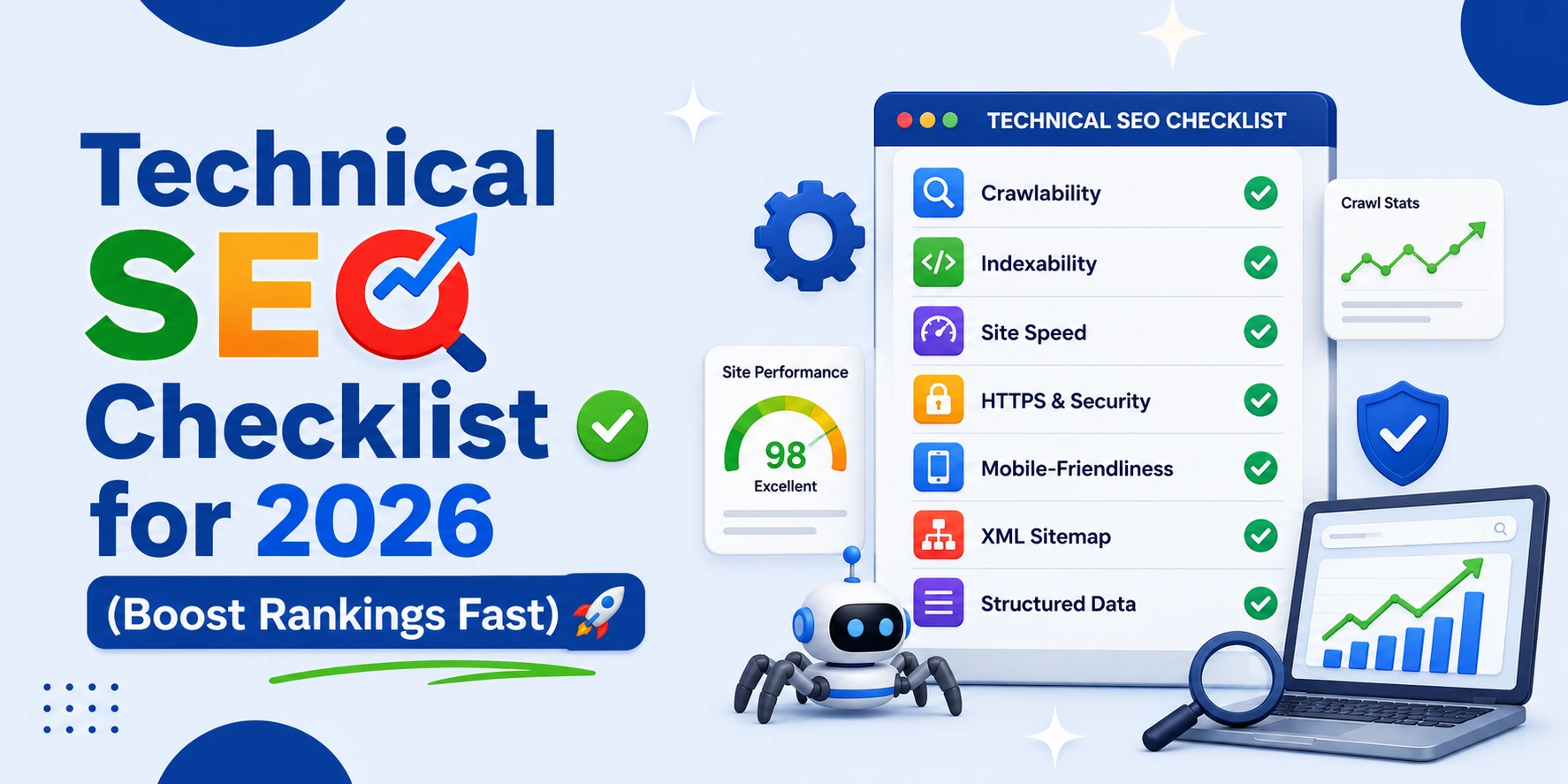
A technical SEO checklist helps improve website speed, crawlability, indexing, mobile usability, and overall search performance. In 2026, businesses need strong technical SEO to help search engines understand their content and rank pages more effectively.
Nowadays, Sites now compete on speed, structure, trust, and user experience. If your site loads slowly or blocks search engines from reading content, rankings will drop. That is why every business needs a strong technical SEO checklist in 2026.
In this guide, we will cover the most important steps for a strong SEO foundation. Whether you run a small business site or a large online store, these tips will help you stay ahead.
Want Results Like These for Your Business?
Get a free site analysis from BThrust Malaysia and find out what's holding your SEO and traffic back.
What Is Technical SEO?
Technical SEO is the process of improving a website’s backend structure so search engines can crawl, understand, and rank pages more effectively.
It includes:
- Site speed
- Mobile usability
- Crawlability
- Indexing
- Structured data
- Internal linking
- Security
A strong setup helps search engines access your pages without issues.
Think of technical SEO as the framework of your website. Without it, even great content may struggle to rank.
Why Is Technical SEO Important in 2026?
Search engines now pay close attention to how websites perform for users. A slow or poorly structured site can struggle to rank, even with strong content. Technical SEO helps search engines crawl, understand, and index pages without issues.
What Makes a Website SEO-Friendly?
A modern website should:
- Load quickly
- Work smoothly on mobile devices
- Use a clear site structure
- Stay secure with HTTPS
- Offer simple navigation
These factors improve both rankings and user experience.
Why Does Semantic Understanding Matter?
Search systems now analyse content, context, and meaning. Your website should organise information clearly so that machines can understand the pages easily.
A strong, complete technical SEO guide 2026 should focus on usability, structure, and accessibility for both users and search engines.
What Should You Include in a Technical SEO Checklist for 2026?
A technical SEO checklist for 2026 should include crawlability, site speed, mobile optimisation, website security, and proper indexing management to help search engines access, understand, and rank your website effectively. Let’s explore below:
Check Website Crawlability
Search engines need proper access to your website pages to understand and rank them. Search engines do not display content from unreachable pages because their crawlers cannot access essential website material.
The foundation of an effective crawlability system requires users to verify their robots.txt documents, while they must repair damaged links and delete multiple redirects that block search engine robots from their desired paths.
The system requires two essential monitoring functions, which track crawl errors and maintain current XML sitemap documents. The most important pages need to stay two clicks away from the homepage because this method helps search engines find them quickly.
A clean website structure enhances search engine crawling performance because it enables users to navigate through the site with greater ease.
Improve Site Speed
Page speed remains one of the most important ranking factors in 2026. Sometimes websites take too long to load will lose their visitors because search engines watch how users interact with these sites. The process of speed enhancement begins when you compress images and remove unused code and block big scripts that cause performance issues.
Browser caching enables websites to load faster when visitors come back to their previously accessed pages. The combination of optimised fonts with simple design elements helps all devices achieve better loading speed performance.
Websites that load quickly lead to better user engagement and lower bounce rates, which leads to higher conversion rates. The process of speed optimisation functions as a fundamental element that all effective website SEO checklists must include.
Focus on Mobile Experience
Mobile devices currently generate the majority of website visitors, so businesses must focus on mobile usability to achieve their SEO objectives. Search engines use mobile website versions to create indexes, so all website content needs to function properly on mobile devices.
A website that supports mobile devices needs to adjust its layout for various display dimensions while showing clear text and offering touch-friendly buttons that users can press without making mistakes.
Web pages need to prevent overlapping content while maintaining fast loading speeds when users connect through sluggish mobile network connections.
Users develop less trust in websites when they receive poor mobile experiences, which leads to higher bounce rates and deteriorates search engine rankings. Mobile optimisation that works well will boost user experience while helping websites show up better in search results.
Secure Your Website
Website security plays a major role in both user trust and search engine rankings. Every website should use HTTPS to protect user data and create a safer browsing experience. It is also important to monitor expired SSL certificates, fix mixed content warnings, and remove unsafe plugins that may create vulnerabilities.
Spam pages and suspicious files should be checked regularly to maintain website integrity. A secure website gives visitors confidence while helping search engines view the site as trustworthy. Strong security practices also reduce the risk of malware attacks and data breaches.
Fix Indexing Problems
Websites must remove particular pages from search result displays that users see in their search results. Search engines need effective indexing strategies to discover pages that offer users genuine value.
Website owners need to examine noindex tags, canonical tags, duplicate pages, thin content, and parameter URLs to stop their website from facing indexing problems. Search engines face confusion because of duplicate pages and low-quality content, which also weakens their ability to rank websites effectively.
The correct management of indexes allows search results to stay clear while it boosts the authority of vital web pages. A thorough technical SEO audit depends on this process as its primary essential component.
What Should an On-Page Technical SEO Checklist Include?
An on-page technical SEO checklist should improve structure, readability, linking, and content understanding. Let’s explore more about it:
Optimise URL Structure
URLs should stay short and clear.
Good URLs:
- Explain page content
- Use readable words
- Avoid random numbers
- Include keywords naturally
Example:
example.com/technical-seo-checklist
Simple URLs help users and search engines.
Use Proper Heading Structure
Headings improve readability and page structure.
Best practices:
- One H1 per page
- Use H2 for main sections
- Use H3 for supporting points
Headings help search engines understand content hierarchy. This is a core part of an on-page technical SEO checklist.
Improve Internal Linking
Internal links guide users and spread authority across pages.
Link to:
- Related blogs
- Service pages
- Important categories
- Key landing pages
You can naturally connect readers to:
- Professional SEO services
Because strong internal linking improves navigation and page discovery.
Add Structured Data
Structured data helps search engines understand page content, which also improves search result appearance.
Common schema types:
- Articles
- FAQs
- Products
- Reviews
- Organisations
Structured data supports visibility in rich results.
What Should You Check During a Technical SEO Site Audit?
A technical SEO site audit helps identify hidden issues that affect rankings and performance.
Check Broken Links
Broken links create a poor user experience. They also waste crawl budget.
Fix:
- 404 pages
- Redirect loops
- Dead internal links
Keep navigation smooth across the site.
Review Duplicate Content
Duplicate pages confuse search engines.
This often happens with:
- Product filters
- Tags
- Session URLs
- Printer pages
Use canonical tags where needed.
Audit Core Web Vitals
Core Web Vitals measure real user experience.
Focus on:
- Loading speed
- Visual stability
- Page responsiveness
Poor scores can affect rankings and conversions.
Test JavaScript Rendering
Many websites rely on JavaScript. If search engines cannot render content correctly, pages may not rank.
Check:
- Hidden text
- Missing links
- Delayed content
- Empty HTML output
Important content should load clearly from the start.
What Should a Website SEO Checklist Include for Better Rankings?
A strong website SEO checklist should improve usability, structure, and content quality.
Optimise Navigation
Users should find information quickly.
Keep menus:
- Simple
- Clear
- Consistent
Good navigation lowers bounce rates.
Create Clean Site Architecture
Site architecture affects crawling and indexing.
A good structure:
- Groups related pages
- Uses logical categories
- Keeps URLs organised
Clear structure supports better rankings.
Remove Thin Content
Thin pages add little value. As low-quality pages weaken site authority.
Try to Improve:
- Short articles
- Empty categories
- Duplicate service pages
Every indexed page should serve a clear purpose.
Optimise Images
Large image files slow down websites.
Use:
- Compressed formats
- Descriptive filenames
- Alt text
- Responsive sizing
Image optimisation improves speed and accessibility.
Which Common Technical SEO Mistakes Should You Avoid?
Avoiding technical SEO mistakes helps protect rankings and improve website performance.
Blocking Important Pages
Sometimes key pages are blocked by robots.txt or noindex tags. Always check indexing rules after updates.
Poor Redirect Management
Too many redirects slow down websites.
Avoid:
- Redirect chains
- Temporary redirects for permanent moves
- Broken redirect paths
Weak Mobile Layouts
Desktop-heavy designs often fail on mobile devices. Test layouts on different screen sizes.
Ignoring Site Monitoring
SEO is not a one-time task.
Regular checks help spot:
- Speed drops
- Broken pages
- Crawl errors
- Indexing changes
Ongoing maintenance protects rankings.
What Are the Most Important Technical SEO Priorities for 2026?
The top technical SEO priorities for 2026 include speed, mobile usability, crawlability, structured data, and internal linking. If you focus on only a few areas this year, start with these:
Priority 1: Site Speed
Fast pages improve rankings and conversions.
Priority 2: Mobile Experience
Most users visit from mobile devices.
Priority 3: Crawlability
Search engines must access important pages.
Priority 4: Structured Data
Semantic clarity improves visibility.
Priority 5: Internal Linking
Strong linking supports page authority.
This approach creates a solid technical foundation.
Final Thoughts
Overall, Technical SEO in 2026 is about clarity, speed, and usability. Search engines reward websites that:
- Load quickly
- Stay organised
- Works well on mobile
- Provide clean user experiences
A complete technical SEO checklist helps you fix issues before they affect rankings. Because regular audits, strong structure, and ongoing improvements keep your website competitive.
Whether you manage your site in-house or use professional SEO services, technical SEO should remain a long-term priority.