





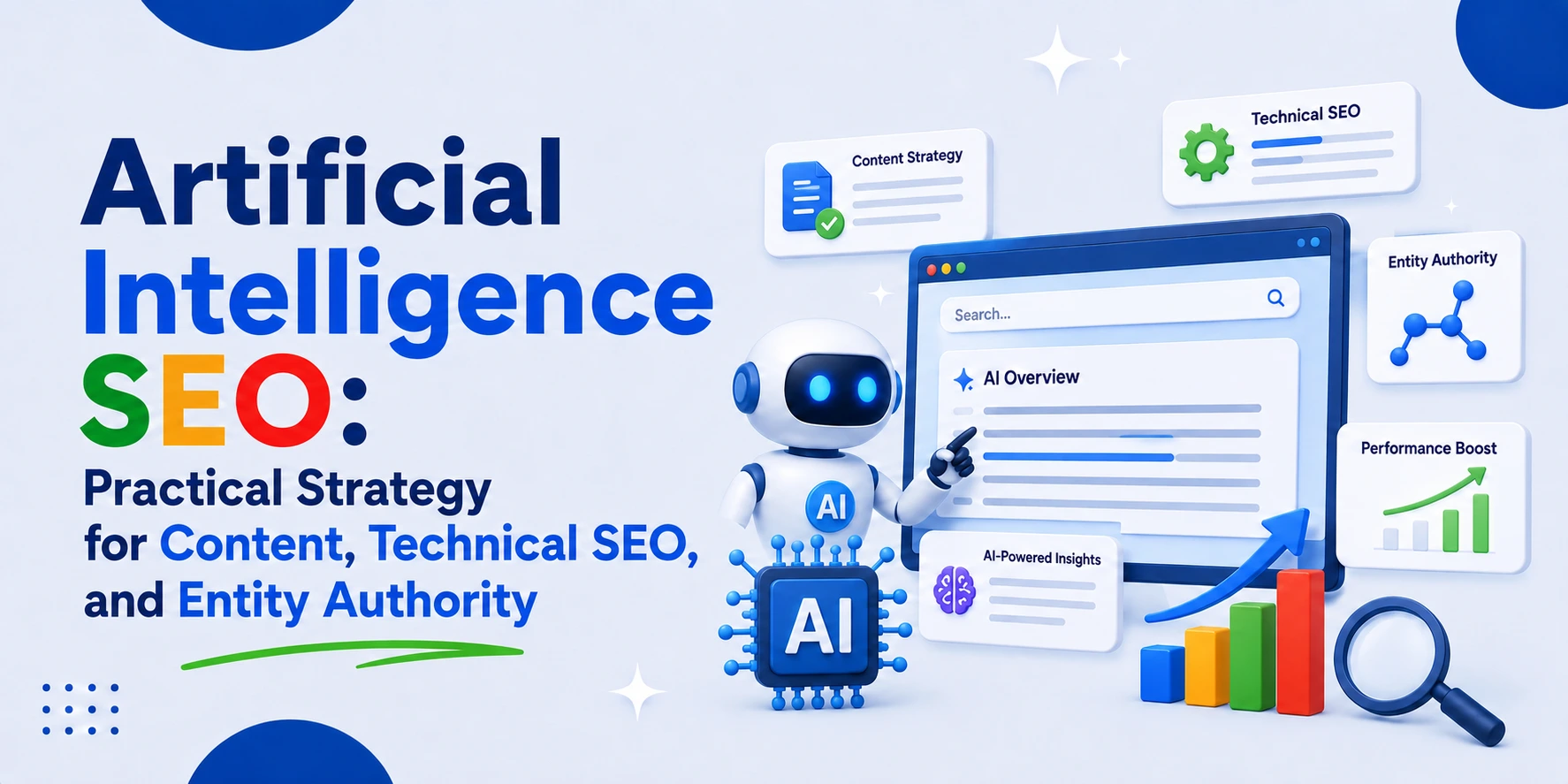
Artificial intelligence SEO is a modern approach to search engine optimisation that combines high-quality content, technical SEO, semantic SEO, and entity authority to improve search visibility. Instead of focusing only on keywords, it helps search engines understand user intent, topic relevance, and the overall expertise of your website.
Websites require high-quality content together with a solid technical base and direct indications that prove their knowledge base in specific subjects. Search engines need AI SEO to perform their functions.
The system uses content strategy together with technical SEO, semantic understanding, and entity authority to help search engines grasp your website, which leads to proper audience delivery.
The guide will teach you about modern SEO through its four main pillars, which include building operational strategies and content enhancement techniques for website optimisation and authority development.
Want Results Like These for Your Business?
Get a free site analysis from BThrust Malaysia and find out what's holding your SEO and traffic back.
What Is Artificial Intelligence SEO?
Artificial intelligence SEO is the practice of optimising content and websites so search engines can better understand user intent, context, and topic relationships. It combines content quality, technical SEO, semantic SEO, and entity authority to improve organic visibility.
Traditional SEO focused on elements such as keywords, meta tags, backlinks, and page optimisation. While these areas remain important, modern search places greater emphasis on user intent, topical relevance, and website quality.
Instead of asking, “Which keyword should this page rank for?”, modern SEO asks, “What information is the user looking for, and how can this page provide the best answer?”
What Are the Four Pillars of Artificial Intelligence SEO?
The four pillars of artificial intelligence SEO are search intent, semantic, technical SEO, and entity authority. Together, these elements help search engines understand your website while improving user experience and long-term search performance.
Content That Matches Search Intent
Every search starts with a question or a need. Before creating content, understand what your audience wants to achieve.
Most searches fall into four categories:
- Informational
- Commercial
- Transactional
- Navigational
The content you create needs to reflect these specific goals that users have. People who want information need clear explanations, but those looking for an SEO service require direct information about available solutions, with their corresponding advantages
Creating useful content that solves problems improves engagement and increases the likelihood of appearing in relevant search results.
Semantic SEO
Semantic SEO studies the connections between different subjects while it avoids using identical keywords multiple times in website content.
For example, an article about technical SEO should naturally include related subjects such as website structure, indexing, internal linking, page speed, and mobile usability. These related concepts help search engines understand the overall topic.
Create detailed resources that answer various connected questions instead of producing multiple brief articles about related subjects. The method produces better search results because it develops authority for specific subjects.
Technical SEO
Websites need more than powerful content to generate steady results because search engines face difficulties when they try to explore and comprehend your website structure.
Your website needs Technical SEO to become accessible for users while maintaining fast loading times and straightforward navigation.
Important areas include:
- Clear website architecture
- Fast loading pages
- Mobile-friendly design
- Secure connections
- Clean URLs
- Proper internal linking
A technically healthy website allows your content to perform at its full potential.
Entity Authority
Entity SEO enables search engines to recognise your business identity, together with the complete content structure of your website.
Entities exist as businesses, people, services, products, and physical locations. The continuous production of relevant website content, together with accurate information, allows search engines to establish better trust in your subject matter expertise.
Building authority requires more than publishing articles. The process needs a website that links its service pages to blogs and author details, and additional resources that support each other.
Check Out: AI SEO vs Traditional SEO
How to Build an Artificial Intelligence SEO Strategy Step by Step
An effective artificial intelligence SEO strategy starts with understanding user intent, organising content into topic clusters, strengthening technical SEO, building entity authority, and continuously improving existing content.
Step 1: Understand Search Intent
Research the questions your audience asks before creating content. Searchers require assistance with their primary concerns, which extend beyond their basic keyword selections.
Articles need to have specific targets that should address particular reader needs.
Step 2: Build Topic Clusters
You should arrange your blog articles into main subjects, which will become the basis for your content organisation.
A business that operates in SEO needs to develop an essential guide which will link to specific content about technical SEO, local SEO, content optimisation, website audits, and entity SEO.
The linked pages work together to build topical authority while also simplifying website navigation between different pages.
Step 3: Create Helpful Content
Create content that solves problems while maintaining basic language that readers can understand.
The content needs to have clearly defined headings and brief sections that present actual situations through logical organisation. Provide enough information about the subject to address typical inquiries, but avoid including unnecessary details.
Step 4: Optimise Your Website
The technical enhancements allow content to become more visible.
Regular website reviews help you identify broken links, duplicate content, slow website pages, and navigation issues. Small improvements can make a significant difference over time.
Step 5: Build Authority
Authority develops through consistency.
Publish high-quality content within your area of expertise, strengthen internal links between related pages, and maintain accurate business information across your website.
Step 6: Review and Improve
SEO is an ongoing process.
Monitor your content, update outdated information, improve internal links, and expand important topics as your business grows. Continuous improvement supports long-term success and AI-driven search optimisation.
Also Read Out: How to Rank in Google AI Overviews
How to Use AI for SEO Content Without Losing Quality
The best way to use AI for SEO content is to support research, planning, and content improvement while keeping human expertise at the centre.
This approach helps maintain accuracy, originality, and a positive user experience.
Plan Content Around User Intent
Start your content development by tracking the questions that your target audience asks about your content. Develop an organised structure that includes the primary subject and its related points and shows their correct sequence. Planning first helps keep your content focused and relevant.
Create Helpful and Accurate Content
Readers who seek answers to their questions need to find useful information that they can use. People need straightforward language, together with actual examples and unambiguous explanations, to understand concepts which help them develop trust. Every section should add value rather than repeat the same ideas.
Improve Existing Content
The process of effective AI content optimisation requires organisations to assess their current website pages, which they have already established.
Businesses need to update their outdated information while expanding vital content, improving their internal link structure, and deleting all unnecessary materials.
Businesses achieve better lasting outcomes through their efforts to improve current articles instead of developing fresh web content.
Check Readability Before Publishing
Review your content to ensure it is easy to read. Keep paragraphs short, use descriptive headings, and remove repetitive sentences. Following these steps helps businesses understand how to use AI for SEO content while maintaining quality, consistency, and a positive experience for readers.
Read this: How Artificial Intelligence is Changing Rankings
Technical SEO Checklist for Modern Search
A strong technical SEO foundation makes it easier for search engines to crawl, understand, and index your website. Focus on website structure, page speed, mobile usability, internal linking, and regular technical reviews to support better visibility.
Use this checklist to maintain a healthy website:
- Create a logical website structure with clear navigation.
- Keep page loading times fast.
- Ensure every page works well on mobile devices.
- Optimise images for performance.
- Use descriptive page titles and headings.
- Build relevant internal links between related pages.
- Fix broken links and redirect errors.
- Maintain clean URLs.
- Help search engines crawl and index important pages.
- Review website performance regularly through AI-powered content audits.
These checks improve user experience while supporting AI-powered SEO and stronger visibility in search.
How to Strengthen Entity Authority
You can strengthen entity authority by maintaining consistent business information, publishing high-quality topical content, improving internal linking, and demonstrating expertise across your website. These signals help search engines recognise your business as a trusted source.
Create Consistent Business Information
Ensure your business details remain accurate across your website. Develop detailed service pages, publish helpful content, and keep your messaging consistent. This helps reinforce your expertise and supports stronger entity SEO across your core topics.
Connect Related Content
Internal linking strengthens relationships between pages and improves website navigation. Link relevant articles and service pages naturally so users and search engines can understand how your content fits together. This also helps build topical authority over time.
Maintain a Structured SEO Process
The established AI SEO workflow for agencies enables agencies to perform content planning and technical assessments and continuous optimisation activities. Businesses that want to reach local customers need to use an AI SEO strategy for Malaysia businesses by developing content that focuses on particular locations and by keeping their business details correct. The process develops authority while building trust, which helps search engines identify your website as an authentic information resource.
Conclusion
Modern SEO has evolved past its previous focus on keywords, which used to be the main element of its structure. Search engines now evaluate how well a website answers questions, connects related topics, and demonstrates expertise.
A successful artificial intelligence SEO approach combines valuable content, semantic SEO, strong technical foundations, and entity SEO into one connected strategy. Businesses need to treat these elements as components of a unified system that brings sustainable visibility instead of handling them as separate assignments.
The website will achieve future search readiness through a practical AI SEO strategy, which includes AI content optimisation for content enhancement and technical maintenance, and AI-based search optimisation for authority growth.
The businesses that achieve enduring success will prioritise user assistance, quality preservation, and website enhancement through ongoing educational development instead of using temporary marketing strategies.